
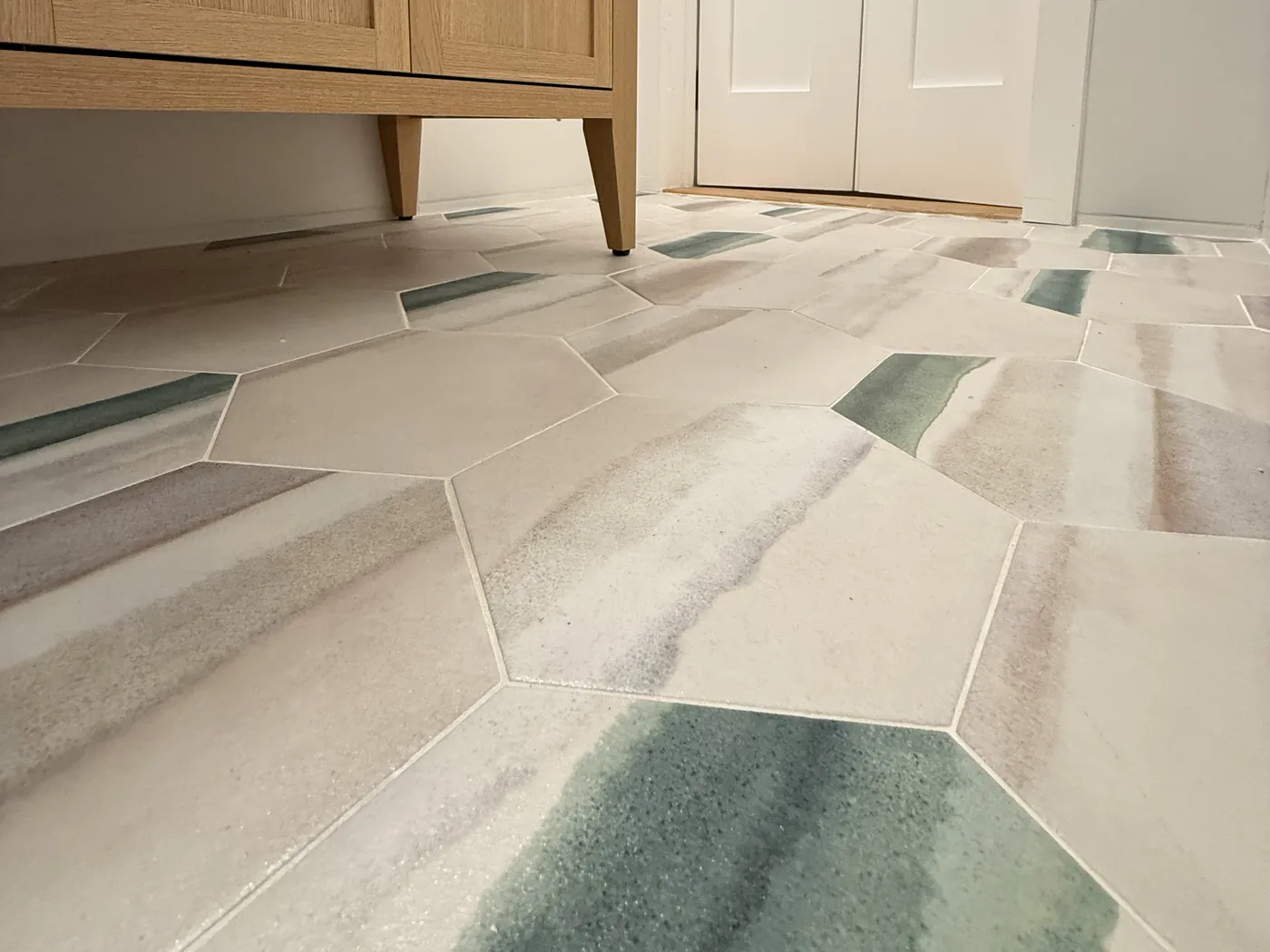
Flooring lives or dies on what's underneath it, not the material itself. Before any hardwood, tile or engineered plank gets laid, we check the subfloor for level, for squeaks, for soft spots, and fix those problems first. Skipping that step is the single biggest reason a new floor ends up hollow sounding or uneven within a year.
Solid hardwood reacts to humidity, it expands and contracts with the seasons, which matters in a region like Rockville where summers are humid and winters are dry. Engineered flooring handles those swings better because of how it's layered, which makes it a better fit for basements or homes without tight humidity control. Tile doesn't move with humidity the same way, but it needs a subfloor stiff enough to prevent flexing, or grout lines crack over time.
Ask what subfloor leveling or repair the quote includes, that's often left out of cheaper estimates and shows up later as a squeak or a visible dip. Ask about acclimation time for wood flooring too, wood that's installed straight out of the box without adjusting to the room's humidity is more likely to gap or cup later.